

Company News, Health and Wellness
Convention on Biological Diversity (CBD)
May
Table of Contents
What is the Convention on Biological Diversity (CBD)?
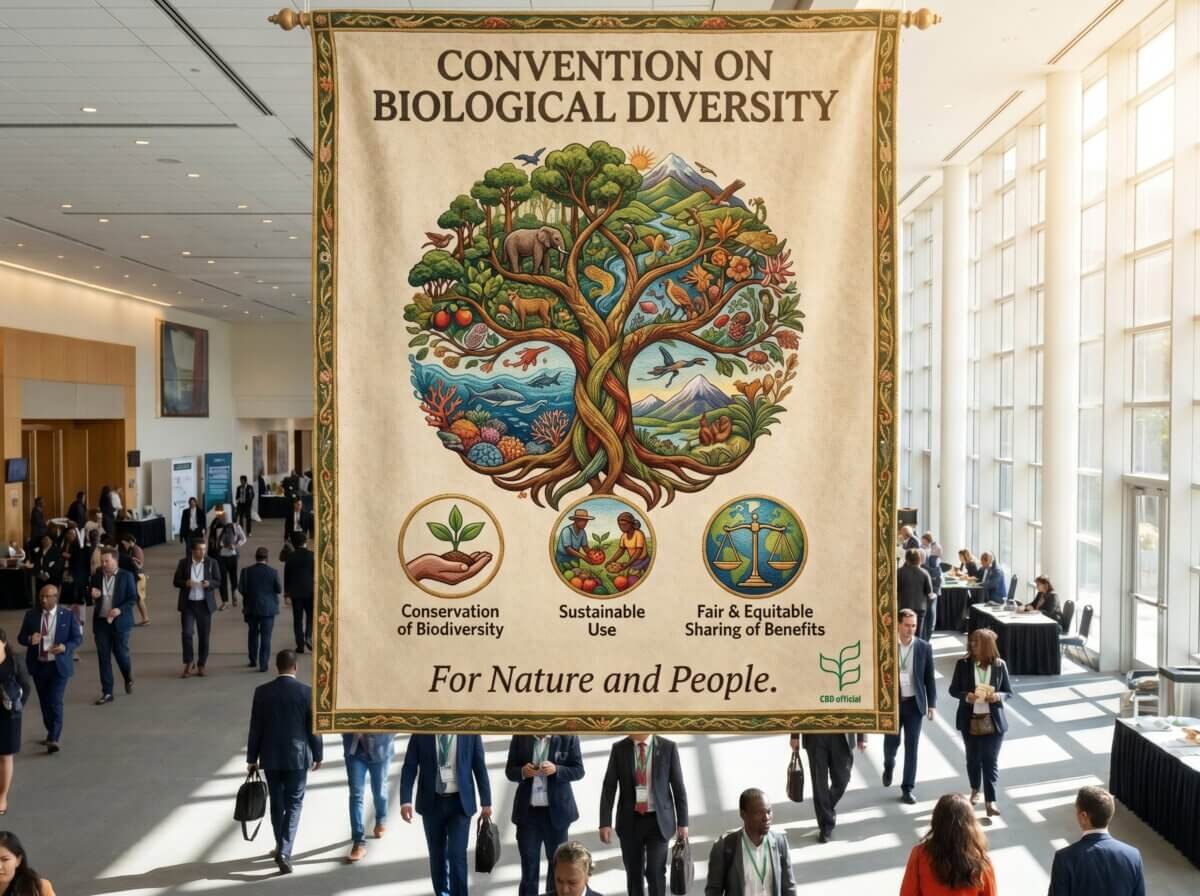
The Convention on Biological Diversity (CBD) is a multilateral treaty focused on conserving biological diversity, ensuring sustainable use of its components, and fairly sharing benefits from genetic resources.
Signed by 150 government leaders at the 1992 Rio Earth Summit in Rio de Janeiro, Brazil, the CBD became the first global treaty to establish a legal framework for biodiversity conservation. The convention took effect on 29 December 1993 and has been ratified by 196 nations.
The CBD was designed as a practical mechanism for implementing Agenda 21 principles, recognising that biological diversity extends far beyond individual plants, animals and microorganisms.
The convention addresses essential human requirements including food security, medicines, clean air and water, shelter, and environmental quality. Among three conventions adopted at the United Nations Conference on Environment and Development, alongside the UN Framework Convention on Climate Change and the Convention to Combat Desertification, the CBD strengthened international environmental law.
Biodiversity coverage spans all levels: ecosystems, species and genetic resources. The scope includes biotechnology through the Cartagena Protocol on Biosafety, governing sustainable biological resource use, genetic resource access, benefit sharing, and biotechnology risks. The CBD encompasses all domains connected to biodiversity and development, from science and politics to education, agriculture, business and culture.
The convention functions as a framework, providing guiding principles for states developing national strategies. Legally binding obligations require contracting parties to develop and implement national strategies and action plans for biodiversity conservation, protection and enhancement. Parties must execute thematic work programmes on ecosystems and address cross-cutting issues established under convention provisions.
Virtually every nation has joined the agreement, with two notable exceptions. The United States remains the only UN member state that signed but never ratified the convention, whilst the Holy See, representing Vatican City, never signed. Although legally binding, the convention does not dictate specific biodiversity protection methods, as countries retain sovereign rights over natural resources. Policy implementation occurs nationally, with Conference of the Parties decisions serving as obligations rather than enforceable mandates.
Two supplementary agreements strengthen the CBD’s specific objectives. The Cartagena Protocol on Biosafety, adopted in January 2000 and entering force in September 2003, ensures safe handling, transport and use of living modified organisms from modern biotechnology. The Nagoya Protocol on Access to Genetic Resources and Fair and Equitable Sharing of Benefits, adopted on 29 October 2010 and entering force on 12 October 2014, provides a transparent legal framework for benefit-sharing from genetic resource use.
Why is the CBD important?
Biodiversity conservation represents a common concern of humankind, establishing the CBD’s foundational significance within international environmental governance. The convention functions as the largest and most significant international agreement on the environment, having been ratified by nearly 200 nations.
Its importance extends beyond conservation mandates to encompass development planning, where the CBD works alongside the Ramsar Convention and the Convention on the Conservation of Migratory Species of Wild Animals to ensure biodiversity considerations inform project implementation.
The convention requires parties to apply impact assessment to projects, programmes, plans and policies with potential negative effects on biological diversity. This assessment framework spans multiple levels, from environmental impact assessment for individual projects to strategic environmental assessment of policies, plans and programmes.
Biodiversity values require consideration in social impact assessment, whilst health impact assessment examines biodiversity’s role in disease transmission or biological control. Trade impact assessment addresses biodiversity-derived commodities in international commerce.
National strategy integration
The CBD’s framework enables integration between national biodiversity strategies and development priorities. Over 190 countries have developed National Biodiversity Strategies and Action Plans, a requirement under the convention that guides nations in integrating biodiversity conservation into policies, economies and legal frameworks.
These plans enable governments to align biodiversity goals with climate objectives and sustainable development targets. Strategic environmental assessment serves as a tool for improving integration of NBSAPs and national development strategies, promoting establishment of clear conservation targets through the NBSAP process.
Impact assessment procedures reference relevant national, regional and international legislation, including the CBD and biodiversity-related conventions.
These references encompass the Convention on International Trade in Endangered Species of Wild Fauna and Flora, the Convention on Wetlands, the Convention on Environmental Impact Assessment in a Transboundary Context, the United Nations Convention on the Law of the Sea, and European Union directives on environmental impact assessment.
Protected areas expansion
The convention has driven significant expansion of protected areas worldwide. By 2020, 15 per cent of terrestrial areas and 7 per cent of marine areas were protected, representing increases from previous decades.
This progress established groundwork for the 30×30 target under the Kunming-Montreal Global Biodiversity Framework, which aims to protect 30 per cent of land and ocean by 2030.
The CBD recognises the roles of Indigenous Peoples and local communities in biodiversity conservation, acknowledging their knowledge and stewardship contributions.
Scientific collaboration and monitoring
Scientific collaboration receives promotion through the CBD’s monitoring and data-sharing mechanisms. The convention encourages governments and businesses to integrate biodiversity considerations into agriculture, forestry, fisheries and infrastructure development.
Countries submit national reports that constitute the primary source of information for global reviews of collective progress in implementing biodiversity frameworks.
As of February 2026, 125 parties submitted their 7th National Reports, including many megadiverse countries, providing accounts of measures taken to implement national targets.
The CBD addresses domains directly or indirectly related to biodiversity and its role in development, spanning science, politics, education, agriculture, business and culture.
This comprehensive scope positions the convention as a framework for actions towards a sustainable future, addressing biodiversity at all levels including ecosystems, species and genetic resources.
What are the three main objectives of the CBD?
Article 1 of the Convention establishes three interconnected objectives that all member countries must pursue: conserving biological diversity, using its components sustainably, and sharing benefits fairly from genetic resources.
These objectives work together through proper access to genetic resources, technology transfer, and appropriate funding, whilst respecting all rights over these resources and technologies.
1. Conservation of biological diversity
The conservation objective focuses on protecting biological diversity at every level – ecosystems, species and genetic resources. The Kunming-Montreal Global Biodiversity Framework translates this into Goal A, which requires maintaining, enhancing or restoring the health, connectivity and resilience of all ecosystems by 2050.
Countries must halt human-caused extinction of threatened species, reducing the extinction rate and risk for all species by tenfold by 2050. Native wild species populations need to recover to healthy, resilient levels. Genetic diversity within both wild and domesticated species must be preserved to maintain their ability to adapt over time.
This conservation mandate goes beyond protecting individual species. The framework aims to substantially increase natural ecosystem areas, setting clear targets for both ecosystem protection and restoration.
2. Sustainable use of biodiversity components
Sustainable use applies across all areas that the Convention addresses and covers all biological resources. Article 2 defines sustainable use as using biological diversity components in ways that don’t cause long-term decline, ensuring biodiversity can continue meeting the needs of both current and future generations.
Article 10 asks countries to adopt measures that avoid or minimise negative impacts on biological diversity. The Addis Ababa Principles and Guidelines provide fourteen practical principles and tools for governing how biodiversity components are used. These principles work within an ecosystem approach, recognising sustainable use as an effective way to reduce poverty and achieve sustainable development.
Goal B of the global framework ensures biodiversity is used and managed sustainably, with nature’s contributions to people – including ecosystem functions and services – valued, maintained and enhanced through 2050. Components that are currently declining need restoration to support sustainable development for present and future generations.
3. Fair sharing of genetic resource benefits
The third objective requires fair and equitable sharing of benefits that arise from using genetic resources. This includes both monetary and non-monetary benefits from genetic resources, digital sequence information on genetic resources, and traditional knowledge associated with these resources.
Indigenous Peoples and local communities should receive appropriate sharing of these benefits, with substantially increased benefits by 2050.
The Convention promotes fair exchange where access to genetic resources and associated knowledge is traded for finance, technology and research participation on mutually agreed terms.
Traditional knowledge linked to genetic resources requires proper protection, contributing to conservation and sustainable use according to internationally agreed access and benefit-sharing agreements.
This objective creates the right incentives between those who use genetic resources and those who provide them, establishing frameworks where benefits are shared in proportion to conservation contributions.
Key protocols under the CBD convention
Two additional agreements strengthen the CBD framework by addressing specific aspects of biodiversity protection and genetic resource management.
Cartagena Protocol on Biosafety
The Cartagena Protocol on Biosafety was adopted on 29 January 2000 and came into effect on 11 September 2003. This international agreement focuses on the safe movement of genetically modified organisms between countries, particularly those created through modern biotechnology.
The Protocol defines living modified organisms (LMOs) as any living organism that contains genetic material altered through modern biotechnology.
This includes agricultural crops that have been genetically modified to improve productivity or resist pests.
The Protocol’s main objective is ensuring adequate protection when these organisms are transferred, handled and used, particularly when they cross international borders.
As of July 2020, 173 parties had joined the Protocol, including 170 United Nations member states, the State of Palestine, Niue, and the European Union.
The agreement establishes two distinct sets of procedures: one for LMOs intentionally introduced into the environment, and another for LMOs intended for direct use as food, feed or processing.
Countries must conduct risk assessments using scientifically sound methods and maintain systems to regulate and control any risks identified.
The Protocol requires proper documentation for all transboundary shipments, including details about the organism’s identity and relevant contact information. Importantly, the Protocol applies the precautionary principle, allowing countries to ban imports of genetically modified organisms when scientific evidence about their safety remains insufficient.
Nagoya Protocol on Access and Benefit-sharing
Adopted on 29 October 2010 and entering force on 12 October 2014, the Nagoya Protocol provides a legal framework for sharing benefits from genetic resources. This agreement addresses how countries and communities should benefit when their genetic resources are used commercially or for research.
The Protocol establishes clear obligations for countries regarding access to genetic resources and how benefits should be shared. Countries must create fair and transparent procedures that require prior informed consent and mutually agreed terms before genetic resources can be accessed. These arrangements cover both monetary benefits, such as royalties, and non-monetary benefits, including sharing research results.
A particularly important innovation is the Protocol’s compliance system. Countries must ensure that genetic resources used within their borders were accessed legally according to the rules of the providing country. The Protocol establishes checkpoints to monitor how genetic resources are used throughout the research and development process, from initial research through to commercialisation.
The Access and Benefit-sharing Clearing-House serves as an information exchange platform, helping to implement the Protocol through improved transparency and legal certainty. This system tracks genetic resource use through internationally recognised certificates and helps connect users with providers of genetic resources and traditional knowledge.
How does the CBD work?
The Convention operates through three main mechanisms that help countries translate biodiversity goals into practical action: a governing body that sets direction, national planning strategies, and regular progress reviews.
Conference of the Parties (COP)
The Conference of the Parties serves as the governing body for all governments and regional organisations that have ratified the treaty.
This ultimate authority reviews progress under the convention, identifies new priorities, and establishes work plans for members. The COP meets every two years, bringing together representatives from more than 190 countries to assess how well countries are implementing their commitments.
At its first meeting, the COP determined a medium-term programme covering 1995-1997, which laid the groundwork for long-term implementation.
The fourth meeting established a programme extending to the seventh meeting and created a process to review operations whilst setting longer-term direction. The seventeenth meeting will take place in October 2026 in Yerevan, Armenia.
National Biodiversity Strategies and Action Plans
Article 6 requires each party to develop national strategies, plans or programmes for biodiversity conservation and sustainable use, or adapt existing strategies according to their particular conditions and capabilities.
National Biodiversity Strategies and Action Plans serve as national roadmaps that guide how countries conserve plants, animals and ecosystems whilst using natural resources sustainably.
Under the Kunming-Montreal Global Biodiversity Framework, countries committed to halting and reversing biodiversity loss by 2030. The COP requested parties to submit revised strategies and action plans, including national targets, by the sixteenth meeting.
However, as of 30 December 2025, only 66 countries had submitted revised plans.
Reporting and monitoring mechanisms
Article 26 mandates that each party present reports to the Conference of the Parties on measures taken for implementation and their effectiveness. The COP adopted enhanced approaches to planning, monitoring, reporting and review, requesting parties to submit seventh national reports by 28 February 2026.
The monitoring framework includes 36 headline indicators, 13 binary indicators, 52 component indicators, and 257 complementary indicators that track progress towards goals and targets.
Global reviews of collective progress occur at the seventeenth and nineteenth COP meetings, based on national reports and other information sources.
CBD’s impact on global biodiversity conservation
Recent developments at Conference of the Parties meetings show concrete progress in global biodiversity protection through new agreements and institutional changes. At COP16 in October 2024, parties established a multilateral mechanism for sharing benefits from digital sequence information on genetic resources, creating the Cali Fund as a notable precedent for benefit-sharing in biodiversity conservation.
Large companies that benefit commercially from digital sequence information contribute based on percentages of profits or revenues, with at least half the funding supporting self-identified needs of indigenous peoples and local communities.
The same conference established a permanent subsidiary body on Article 8(j), enhancing indigenous peoples’ participation in convention processes through a new Programme of Work that ensures their meaningful contribution towards conservation objectives.
This institutional change recognised people of African descent embodying traditional lifestyles in implementing sustainable biodiversity use.
COP16 also addressed invasive alien species through improved cross-border trade regulations and better coordination with e-commerce platforms. The conference renewed processes for identifying ecologically or biologically significant marine areas after eight years of stagnation, supporting 30×30 protected areas targets.
A Global Action Plan on Biodiversity and Health adopted One Health approaches, acknowledging connections between ecosystem health and zoonotic disease emergence.
Progress in national reporting shows measurable engagement with the framework. By February 2026, 125 parties had submitted seventh national reports, whilst 119 countries aligned national targets with the Kunming-Montreal Global Biodiversity Framework.
These figures indicate growing participation in the CBD’s monitoring and assessment processes, though challenges remain in ensuring comprehensive global coverage.
FAQs
Q1. What is the Convention on Biological Diversity and when was it established? The Convention on Biological Diversity is a multilateral treaty dedicated to conserving biological diversity, ensuring sustainable use of its components, and fairly sharing benefits from genetic resources.
It was signed by 150 government leaders at the 1992 Rio Earth Summit in Brazil and entered into force on 29 December 1993, with 196 nations having ratified it.
Q2. Which countries have not ratified the CBD? Nearly every nation has become party to the agreement, with two notable exceptions. The United States is the only UN member state that has signed but never formally ratified the convention, whilst the Holy See (Vatican City) has never signed the agreement.
Q3. What are the three main objectives of the CBD?
The three interdependent objectives are: conservation of biological diversity at all levels (ecosystems, species and genetic resources); sustainable use of biodiversity components in a manner that doesn’t lead to long-term decline; and fair and equitable sharing of benefits arising from the utilisation of genetic resources, including with Indigenous Peoples and local communities.
Q4. What is the Cartagena Protocol on Biosafety?
The Cartagena Protocol is a supplementary agreement to the CBD that was adopted in January 2000 and entered into force in September 2003. It governs the safe handling, transport and use of living modified organisms (LMOs) resulting from modern biotechnology, ensuring adequate protection during transboundary movements whilst accounting for risks to biodiversity and human health.
Q5. How do countries implement the CBD at national level? C
ountries develop National Biodiversity Strategies and Action Plans (NBSAPs), which serve as national roadmaps for conserving biodiversity and using natural resources sustainably. They must also submit national reports to the Conference of the Parties on measures taken for implementation and their effectiveness, with progress monitored through a framework comprising multiple indicators.